Showing posts with label wild fruit. Show all posts

Sunday, 31 July 2016

Wild raspberries (Rubus idaeus)

Wild raspberries come from the large Rubus genus of plants in the Roseaceae or rose family. They produce a white flower followed by a red fruit. The fruit is an aggregate of drupelets. Raspberries are native to Europe and Northern Asia. However, they are widely cultivated in many areas of the world.

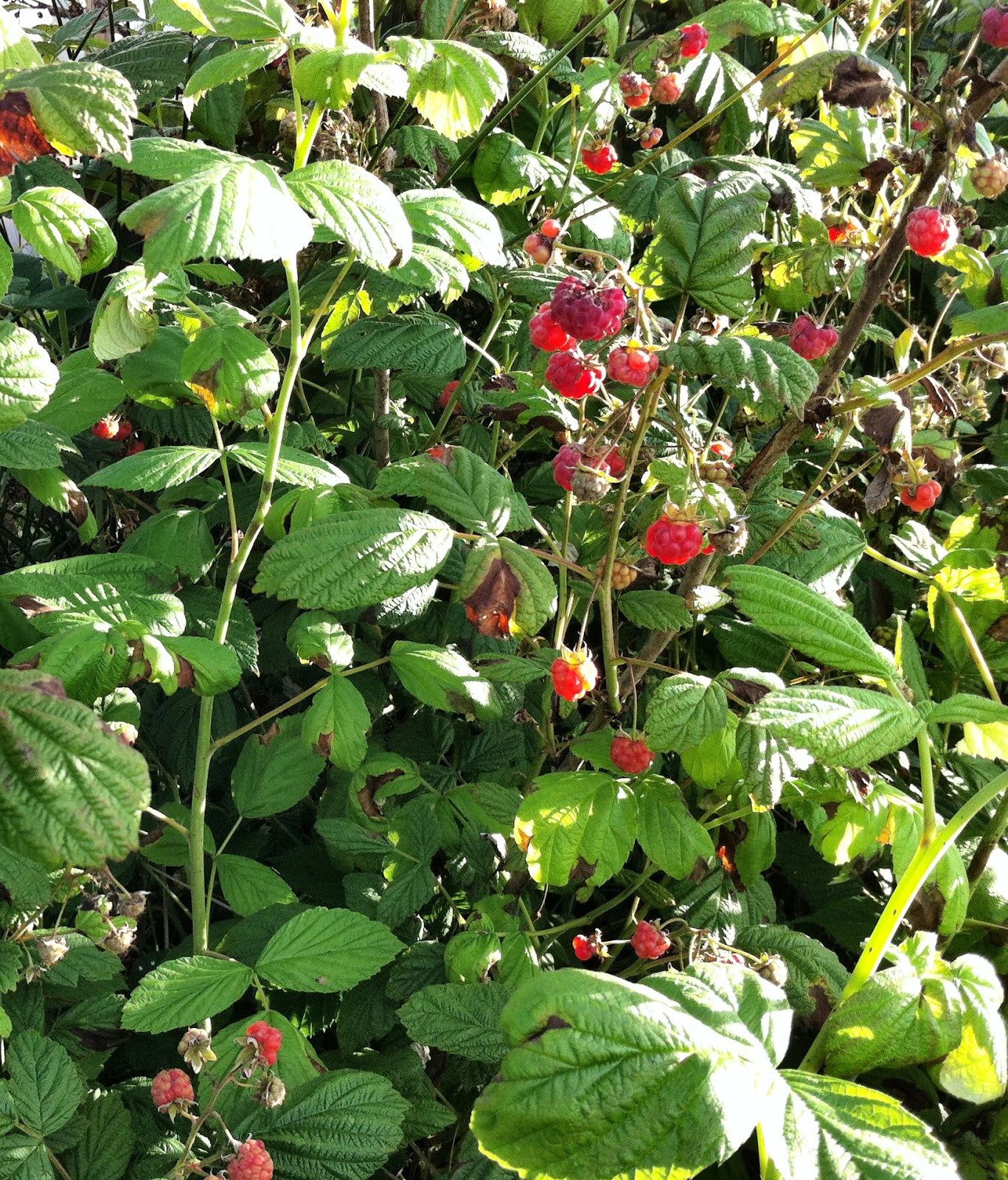
An image of wild raspberry canes in Scotland.


The wild raspberry is ripening in Scotland now (between June and September) so get out there and pick some. They can be found in woodlands, on the margins of woodlands and in hedgerows. They may be a little smaller, but the taste is far superior to the cultivated species.

We have a lot of wild raspberries on our land and they fruit over a long period of time. We don't need to water them, feed them, tie them up, cut them down or do anything else to them so we don't bother growing the cultivated varieties!

An image of wild raspberries picked in Scotland
Wild raspberries picked today!


If, like us, you don't live near a town, having an abundance of wild fruit on our doorstep like this is a blessing. This is nature's own supermarket at its finest.

Other uses

The leaves, roots and fruit are used in herbal medicine. A blue dye can be obtained from the fruit. The stems can be used to produce a fibre for paper making.

Raw Edible Parts

The fruit can be eaten raw. We love the fruit as a topping for raw vegan cheesecake, in smoothies or just eaten straight from the plant. The leaves can be made into a tea. The young shoots, emerging from the ground in spring, can be peeled and eaten raw. The roots, however, require cooking before eating.
Saturday, 28 November 2015

Blackberry (Rubus fruticosus)

The blackberry (Rubus fruticosus) is a hardy self-fertile deciduous shrub from the Rosaceae family. Also known as brambles. Botanically, it is an aggregate fruit composed of small drupelets. The roots are perennial and the stems are biennial. Once the fruit is produced the stems die down. There are over 375 species, many of which are closely related.

It is very common in the British Isles and once established can produce vast quantities of fruit. Gardeners often find they can't get rid of a shrub in a garden setting but it is best to make good use of a vigorous blackberry rather than try to eradicate it!

An image of wild blackberries (Rubus fruticosus) growing in Scotland
Wild blackberries (R. fruticosus) growing in Scotland


Growing methods

The blackberry is usually found in woodland, on waste ground, in hedgerows and meadows. It is in leaf from March onwards, flowers from May to September and fruits from August until November. It prefers moist soil and semi-shady conditions but the fruit ripens best when the shrub is in a sunny position. The blackberry will tolerate poor soil, drought and windy conditions.

Shrubs can be propagated by seed sowing, tip layering, cuttings and division. If growing by seed sow in the autumn under cover. Stratifying the seed will help germination. Prick out seedlings and pot on under cover. Plant outside during the following spring. If tip layering, do so in the summer and plant out in the autumn. Cuttings may be also taken in the summer. Use semi-ripe wood. If propagating by division do so either in early spring or just before leaves fall in the autumn.

Various cultivated varieties are available for purchase. These can be trained in a variety of different ways.

Birds enjoy the fruit so shrubs may need to be protected with fleece or netting.

Other uses

The blackberry is a pioneer shrub which can also protect trees during their early growth. The fruit can also be used as a dye. The stem can be used to make fibre. The root and leaves can be used medicinally. The blackberry is a very good shrub for attracting wildlife.

Raw edible parts

The young leaves, young ground shoots and fruit are all edible raw. The fruit is very popular and should be picked when ripe and used immediately. It is often made into jams, jellies, syrups and pies. Although most people cook the blackberries for these recipes, they can be made using raw fruit. They can also be frozen for use later on. The leaves can be fermented, dried and used for black tea. The fresh leaves can be made into a green tea. The newly emerged ground shoots should be peeled before eating.

 As a point of interest all Rubus species have edible fruits.